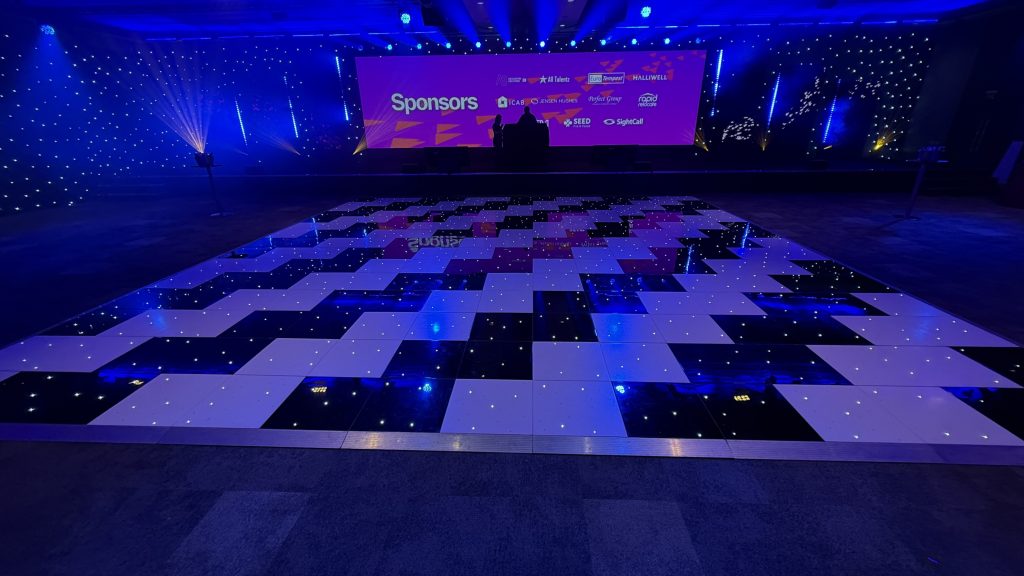
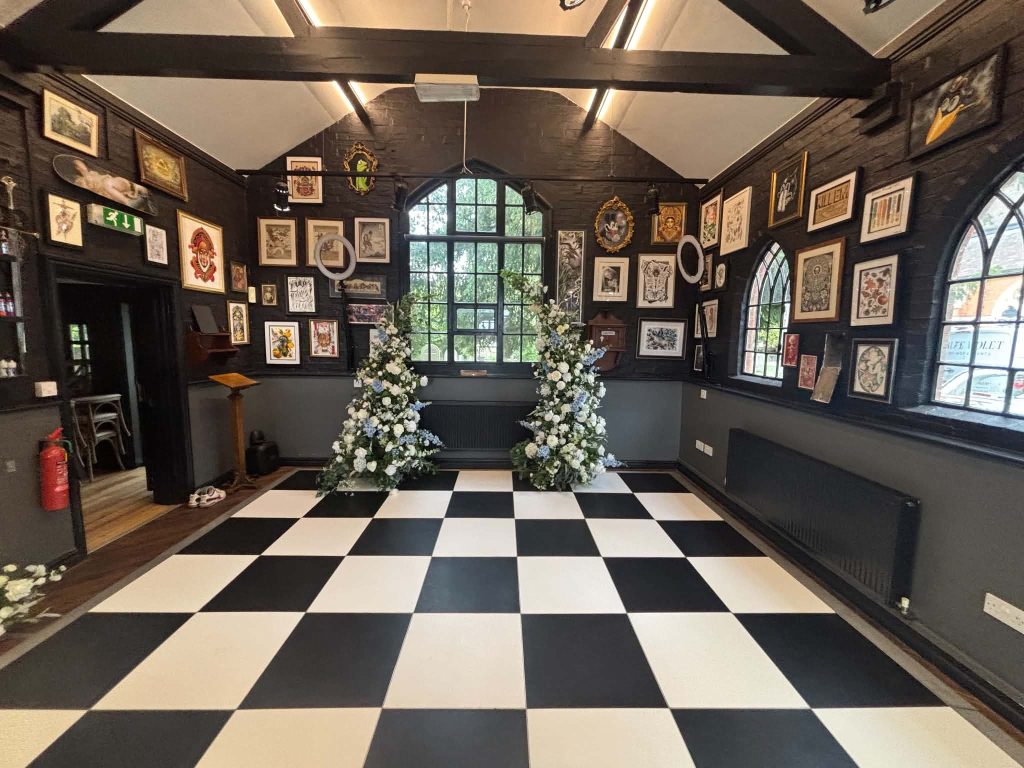
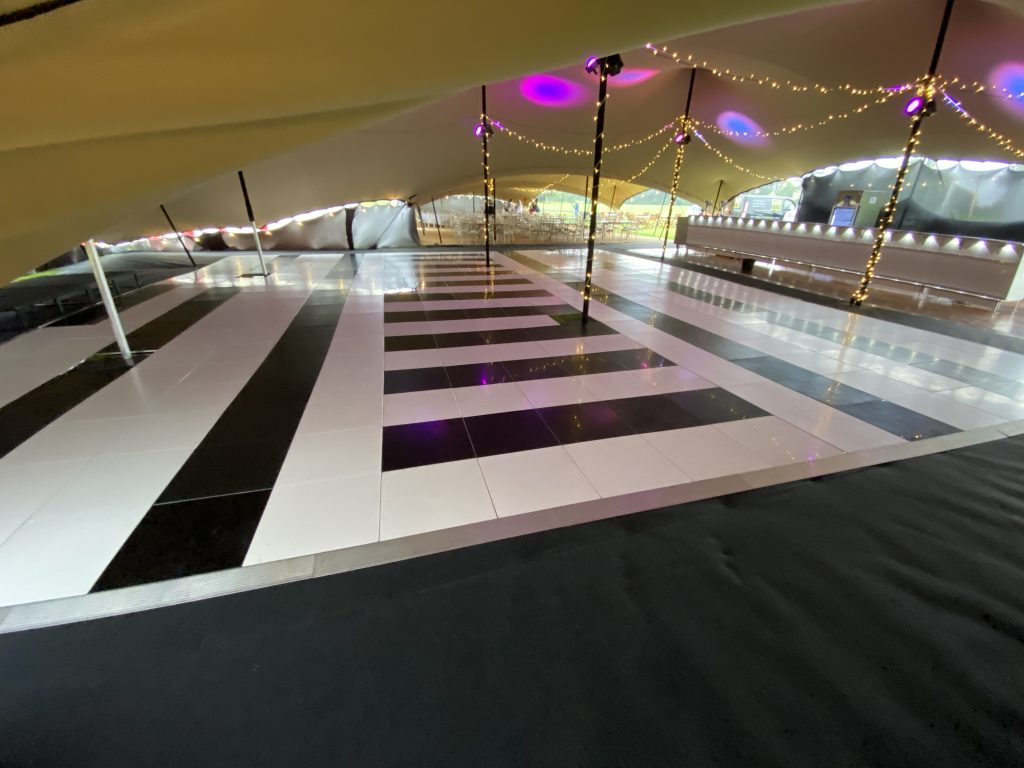
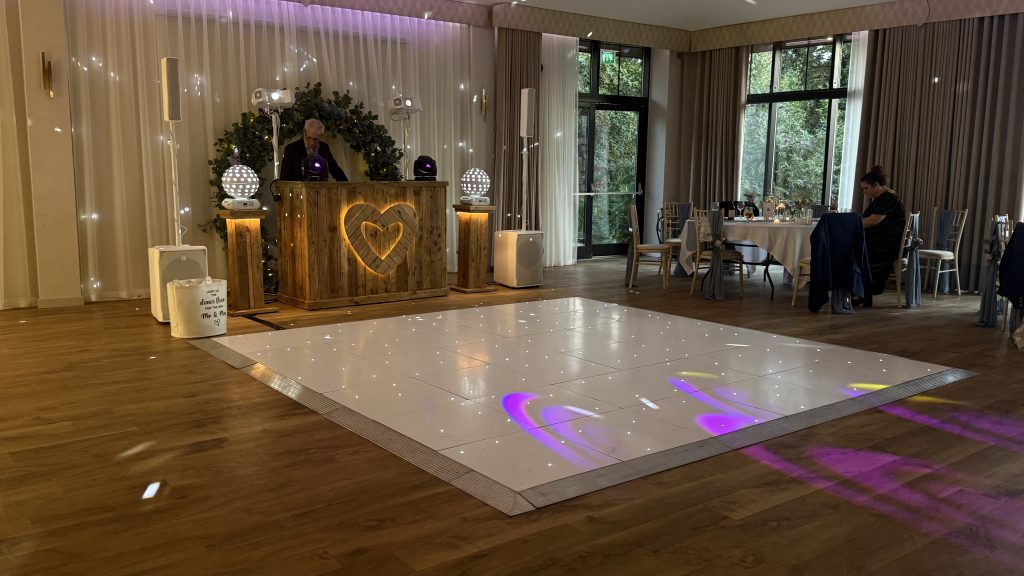
On Tuesday 29 September 2026, we installed a 30ft × 30ft black and white starlit dance floor at The Vox in Birmingham.
The floor contained 105 full panels and 15 half panels, creating 900 square feet of dancing space. Rather than using a conventional chequered layout, the black and white panels were arranged in a staggered, offset pattern.
The initial installation went smoothly, the client loved the finished result and every panel was working correctly.
Then, while taking photographs before the guests arrived, I noticed that one panel near the centre of the floor had started playing up.
There was no safety concern and it was unlikely that many people would have noticed the fault. However, once I had seen it, I had a decision to make: leave one intermittently flickering panel in place or lift approximately half of the newly completed floor and replace it.
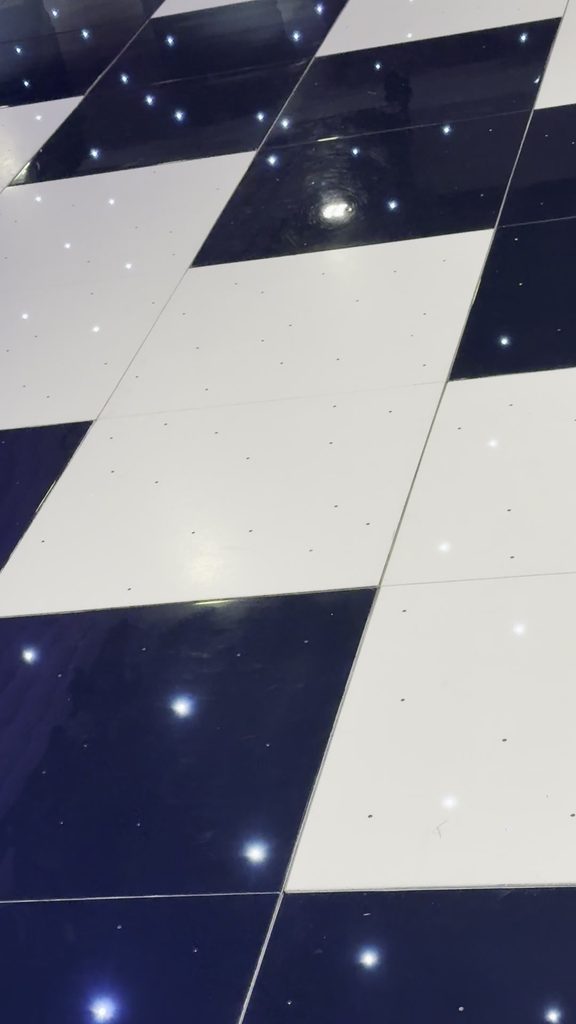
A large black and white starlit floor
The original enquiry came through the DJ, who passed our details directly to the end client rather than acting as a middleman.
The client selected a 30ft × 30ft floor combining our black and white starlit panels. The design used an offset pattern, with the alternating colours forming staggered lines across the floor.
This installation also included some of our recently refurbished black starlit panels. The renewed mirror-shine finish looked particularly impressive alongside the white panels and under The Vox’s blue and purple event lighting.
A floor of this size requires:
- 105 full-size panels
- 15 half panels
- Four heavy equipment trolleys
- Multiple powered edging sections
- Spare panels and components
- A considerable amount of perimeter edging
We provide the floor with more power capacity than it should ordinarily require. Multiple power feeds mean that the floor is not dependent on one powered edging section or power lead remaining connected throughout the event.
Allowing time for access at The Vox
The physical installation is only one part of working at The Vox.
We normally allow between 45 minutes and an hour simply to move the equipment from the vehicle to the function room. The loading area is below the venue, and the trolleys then travel in the lift before being taken along the route to the event space.
The walk from the lift to the function room can take between five and ten minutes with each heavily loaded trolley.
It is therefore important to confirm that suitable loading space will be available and to allow plenty of time before the room becomes accessible.
For this event, I left at approximately 3pm and arrived at around 4.30pm. The journey would normally take about an hour, but additional time was allowed for traffic, particularly around the M42.
Fortunately, there was sufficient space in the loading area on this occasion, so the van did not need to be moved immediately to an external car park.
By the time all four trolleys had reached the event space, everything was ready for our scheduled room access at approximately 5.15pm.
Installing 900 square feet in around 30 minutes
Once the equipment is inside the function room, installing the floor is relatively straightforward.
Two members of The Vox team were particularly enthusiastic and offered to help. I laid the panels because the offset pattern required them to be placed in a specific order and orientation. The venue staff moved the black and white trolleys behind me so that the next panels were always close at hand.
They also helped with some of the edging once the main floor was complete.
With the equipment positioned beside the installation area, I can normally lay a 30ft × 30ft floor in under 30 minutes. The Vox team were surprised by how quickly the floor took shape.
The complete installation, including positioning, testing and fitting the edging, was finished at approximately 6pm.
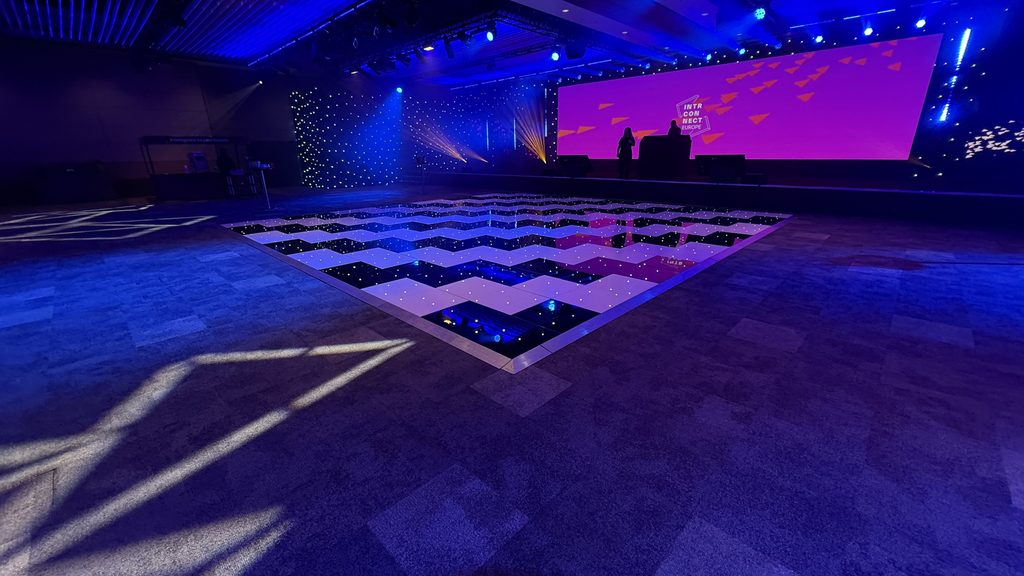
Every panel was checked and working
All our illuminated panels are tested on a bench before they are loaded.
They are checked again during installation, and we carry out a final inspection once the complete floor is powered and ready. The client also saw the finished floor before the event and was extremely pleased with it.
At that point, everything was operating correctly.
We spent approximately 20 minutes talking to the client and members of the venue team about the floor and the event. The installation was complete, the pattern looked fantastic and we still had a comfortable amount of time before guests were due to arrive at 7pm.
I then began taking photographs and video of the finished setup.
That was when I noticed one panel starting to flicker.
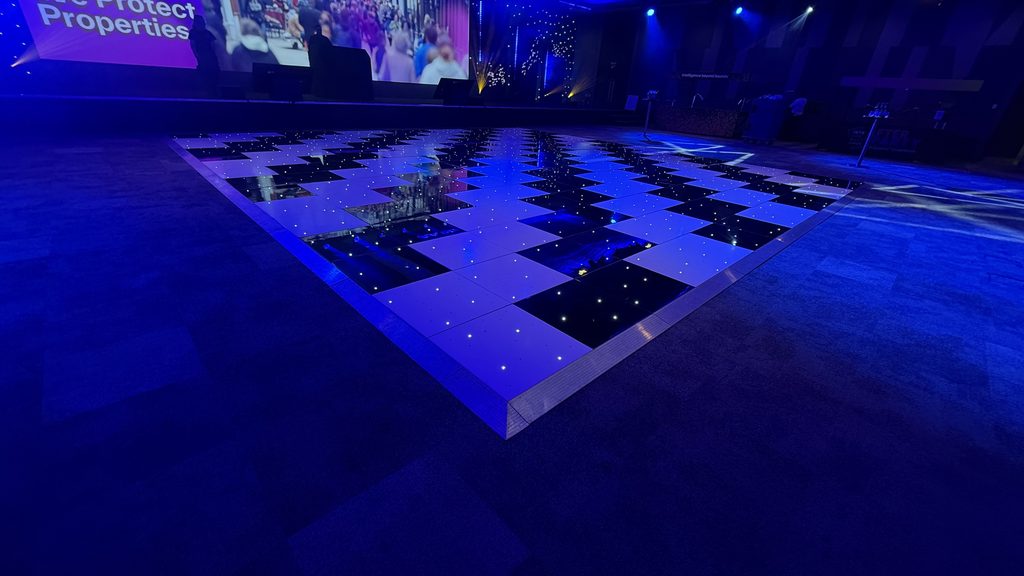
One faulty panel near the centre
The problem was intermittent and only affected some of the LEDs within the panel. It did not create a safety issue and, within a 900-square-foot dance floor, it probably would not have been noticed by most guests.
Unfortunately, the panel was positioned only one row away from the centre.
Replacing it was not simply a matter of lifting the faulty panel. Because of the way the system connects together, approximately half the floor would need to be released and lifted before the panel could be reached.
There were about 35 minutes remaining before guests were due to enter the room.
I had two options:
- Leave the panel in place and hope nobody noticed
- Lift roughly half the floor, replace it and rebuild everything before 7pm
We had a spare panel with us and enough time to attempt the replacement, so I decided to fix it.
Lifting half the finished floor
The edging was removed and the panels were carefully lifted back until the faulty section could be reached.
The affected panel was removed and replaced with the spare. The floor was then relaid in the correct offset sequence, reconnected, tested and edged again.
The entire repair took approximately 15 minutes.
It was hard work, particularly after already moving four trolleys through the venue and completing the original 900-square-foot installation. However, the rebuilt floor was ready at approximately 6.45pm—about 15 minutes before guests arrived.
Unless somebody had watched the work taking place, they would never have known that half of the floor had just been lifted.
Would other dance floor companies have replaced it?
I later posted a video of the fault in a trade group for dance floor suppliers and asked what other operators would have done.
I did not initially say that we had replaced the panel.
The majority said they would probably have left it. The fault was relatively subtle, there was no safety concern and most clients or guests were unlikely to notice one intermittent panel within such a large floor.
A smaller number said they would have changed it.
I understand both sides. Taking apart a substantial section of a large floor introduces extra work and risks running out of time before guests arrive.
However, it only takes one client to notice the fault.
Once that happens, the client is no longer looking at the overall effect of a 900-square-foot floor. They are looking at the one panel that is not working properly.
As we had a replacement available and enough time to complete the work safely, leaving it did not feel like the right option.
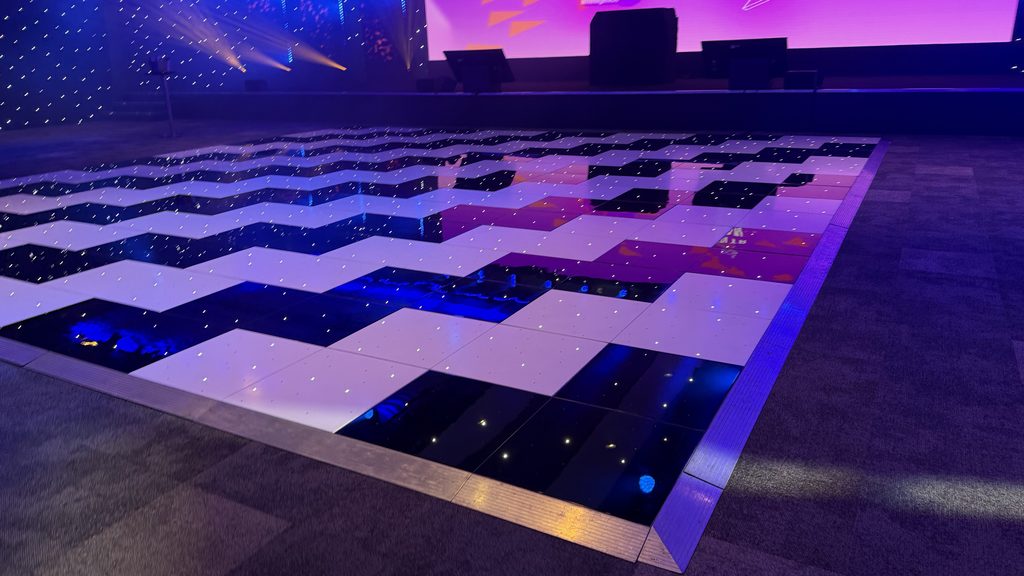
Why we carry spare equipment
Electronic equipment can occasionally develop a fault, even after it has been tested.
This panel passed its workshop test, operated correctly throughout the installation and was working when the completed floor was checked with the client. The fault only appeared later while I was taking photographs.
The panel is still being investigated because the problem remains intermittent.
It demonstrates why we carry spare panels and build extra time into our schedule. The objective is not to pretend that equipment can never develop a fault. It is to prepare for that possibility so it does not affect the client’s event.
Even if we had not carried a direct replacement, I would still have lifted the floor to inspect the panel. If it could not be repaired immediately, it may have been possible to move it from the centre to a less prominent position near an outside edge.
Having the spare meant we could resolve the problem properly.
Midnight collection
The event was a Tuesday-night work function. It was relatively quiet by the time we returned at midnight, partly because many of those attending had a conference the following day.
Jez joined me for the collection.
The floor was dismantled and loaded back onto the four trolleys before making the journey from the function room to the loading area. As with the setup, moving the equipment through the venue was the most time-consuming part of the collection.
Once the trolleys reached the loading bay, everything was loaded into the van and returned to our unit.
A finished floor the client could rely on
The completed black and white floor looked superb beneath The Vox’s event lighting.
The staggered design provided something different from a traditional chequered dance floor, while the combination of mirror-finished black panels, white panels and starlit LEDs created a distinctive centrepiece for the room.
From the client’s perspective, the floor was installed, tested and ready before the doors opened.
They did not have to worry about the intermittent panel, the replacement or the 15-minute rebuild. That is how it should be.
The most important part of supplying professional event equipment is not claiming that something unexpected can never happen. It is allowing sufficient time, carrying suitable spares and dealing with problems before they become the client’s problem.